
Simple, practical coping skills for kids to use throughout the day, from calm mornings to peaceful bedtimes. Tips from Intentional Growth Behavioral Health Services.
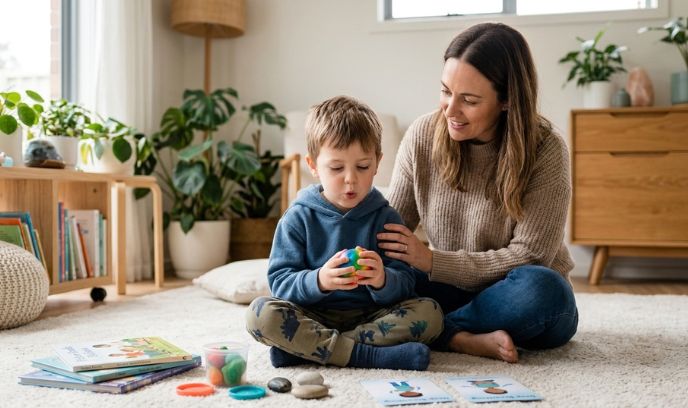
Most of us only think about coping skills once a meltdown is already underway. The shoes won't go on, the homework is a disaster, and suddenly we're asking a very upset child to "just take a deep breath."
Here's the good news: coping skills aren't just emergency brakes. Coping skills for kids are simple strategies that help children manage big feelings and calm their bodies. When we practice them throughout the day, kids build resilience and learn to move from one activity to the next with a little more ease. Let's walk through what that can look like, from the first alarm clock to lights out.
Children aren't born knowing how to handle disappointment, worry, or frustration. Their brains are still developing the skills that help them pause, name a feeling, and choose a response. That's not a flaw. It's simply where they are in development, and it means they need practice and support.
When kids have a few go-to coping skills, they tend to recover from hard moments more quickly. They also learn that feelings are manageable rather than scary, and that they can do something about them. Over time, that sense of "I can handle this" becomes a foundation for confidence, friendships, and school success.
You wouldn't use a hammer to tighten a tiny screw, and your child can't use the same strategy for every feeling. Sometimes a child needs to burn off extra energy. Other times they need to quiet a racing mind.
It helps to think of three kinds of tools. Grounding skills bring a child back to the present moment, which is great for worry. Release skills let tension out through movement or play. Calming skills slow the body down and bring a sense of safety. When kids learn which tool fits which feeling, they feel more capable and more in control of their inner world.
Before a child can use any tool on this list, they usually need a calm adult nearby. Experts call this co-regulation: children borrow our steady breathing, soft voice, and relaxed body until they can create those states on their own.
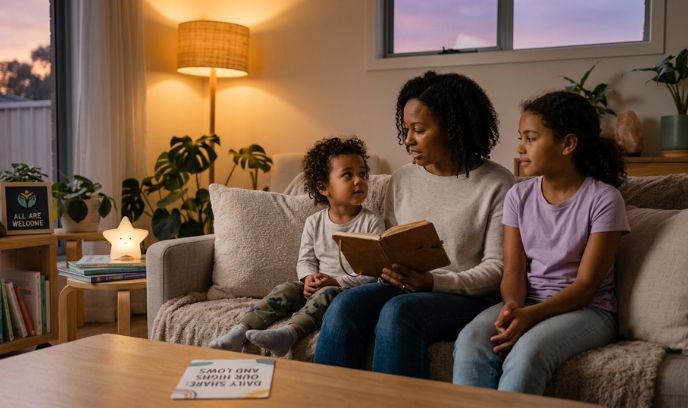
That doesn't mean you must be perfectly calm. It means that when you take a slow breath, lower your voice, or sit beside them instead of towering over them, you're teaching with your body. And if you lose your cool sometimes, that's human. Repairing it ("I got frustrated earlier. Let's try again.") teaches kids that big feelings can be handled, too.
Mornings can be rushed and full of anticipation. Maybe your child feels anxious about school, or maybe they just can't seem to wake up. Either way, the start of the day is a great time for a small, supportive routine.
If your child wakes up worried or sluggish, grounding skills can help them settle in. Try the "5-4-3-2-1" game at breakfast: name five things you see, four you can touch, three you hear, two you smell, and one you taste. Or practice "bubble breathing" on the drive to school, taking a slow breath in and blowing out gently, as if making a giant bubble.
If your child wakes up buzzing with nervous energy, give that energy somewhere to go. A quick kitchen dance party or a few morning stretches can turn restlessness into a steady start.
By the time they get home, kids have spent hours handling social dynamics, schoolwork, and structure. Many walk through the door carrying a full cup of stress and big feelings they've been holding in all day.
Try this: skip "How was your day?" for the first few minutes. Instead, give your child space to shake it off. Jumping on a trampoline, squeezing playdough, or coloring can release physical tension. If they seem overwhelmed by worry or sadness, a gentle break works too. Read a favorite book together, or let them spend quiet time with the family pet.
Once their body settles, you'll often find they're far more ready to talk.
As the day ends, your child's nervous system needs help shifting into rest. A predictable evening routine does a lot of that work on its own, because it tells their body it's safe to sleep.
Deep, slow breathing is a good place to start. Try "box breathing" (in for four, hold for four, out for four, hold for four) or have them blow out imaginary birthday candles. Progressive muscle relaxation can ease physical restlessness: your child gently tenses and releases their muscles, from toes to head.
Most importantly, end the day with connection. Share one thing that felt hard today and one thing that felt good. That small ritual builds a lasting sense of emotional security before they close their eyes.
Save this quick reference for busy days.
Different feelings call for different tools. Here's how to match them.
Anxious kids often feel it in their bodies first: a tight tummy, a racing heart, restless legs. Grounding and slow breathing work best here. Try 5-4-3-2-1, bubble breathing, or holding a cool, smooth object. A short "worry time" earlier in the day, where your child shares worries and you listen, can keep them from spilling out at bedtime.
Anger needs somewhere to go. Physical release skills help most: pushing against a wall, squeezing a stress ball, jumping, or tearing scrap paper. Wait until the energy comes down before you talk about what happened.
Sadness usually needs comfort, not fixing. A hug, a cozy blanket, a favorite book, or quiet time with a pet can help. Simple words like "That sounds really hard" often do more than a pep talk.
Moving from play to dinner or from home to school can feel big. Give a heads-up ("Five more minutes, then shoes"), use a visual timer, and offer a small choice, like which shoes to wear first. Predictability is calming.
When a child is in the middle of a meltdown, their thinking brain is offline. That's not the time to teach a new skill. The goal is simply to help them feel safe until the storm passes.
The practice you do on calm days is what makes these hard moments easier over time.
The same tool won't work for every age. Match the skill to your child's development, and expect to adjust as they grow.
That's completely normal, and it doesn't mean the skill failed. Kids learn these tools best when they're calm, not in the middle of a hard moment, so practice at easy times. Do the skill together, since children copy what we do more than what we say. Offer two choices, like "Do you want to jump on the trampoline or color?", so they feel a sense of control. And if mornings in your house are chaos, pick just one skill to try this week. One minute counts.
A calm-down kit gives your child a go-to place for their tools. Use a small box, bag, or corner of their room, and let them help fill it. Good items include:
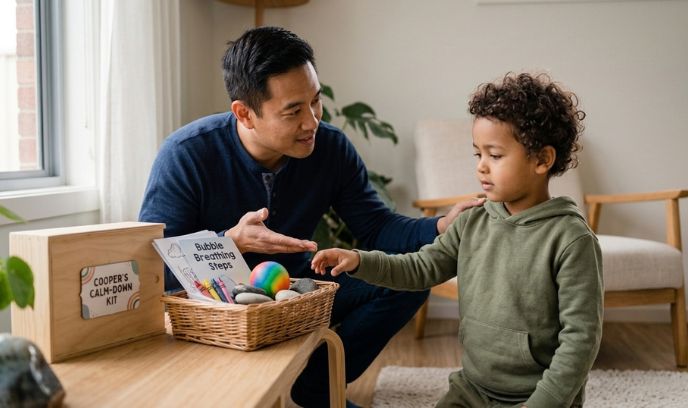
To make skills stick, practice one at a time for a week or two, at calm moments, before adding another. Notice what your child enjoys and let them lead. Praise effort ("You tried the bubble breathing!") rather than results. Progress is rarely a straight line, and some days will be harder than others.
Every parent falls into these. A few small shifts can help:
Everyday stress is a normal part of growing up, and coping skills go a long way. But sometimes a child needs more. It may be time to talk with a child therapist if your child's big emotions happen often, last a long time, or get in the way of school, friendships, sleep, or family life. Frequent stomachaches or headaches with no clear cause, avoiding things they used to enjoy, or ongoing sadness or worry are also worth paying attention to. If you're unsure, trust your instincts. If you ever worry about your child's safety, call or text 988, or call 911 in an emergency.
What are good coping skills for kids? Deep breathing, movement, drawing, grounding games like 5-4-3-2-1, and quiet time with a favorite book or pet are all great starting points.
How do I teach my child coping skills? Practice together when your child is calm. Keep it short and playful, model the skill yourself, and let your child pick which one to try.
What helps a child calm down before bed? Slow breathing, gentle muscle relaxation, and a predictable routine that ends with a moment of connection.
What are good coping skills for anxiety in kids? Grounding skills, such as 5-4-3-2-1, bubble breathing, and box breathing, often help most. Gentle movement can also ease nervous energy.
How long does it take for coping skills to work? Many kids feel a bit calmer right away, but skills usually become automatic after weeks of regular practice. Be patient and keep practicing on calm days.
What if my child refuses to use coping skills? Stay calm, offer two choices, and try the skill alongside them. If resistance continues or distress is high, a child therapist can help.
When should I see a therapist about my child's emotions? Consider reaching out if feelings are frequent, intense, or getting in the way of school, friendships, sleep, or family life.
Supporting your child isn't about being perfect. It's about practicing together. The next time your child hits a hard moment or a tricky transition, take a breath and wonder: What does their body need right now? Do they need to release energy, ground themselves, or find comfort?
If these ideas helped, save this post for your next busy transition, or share it with a fellow parent who could use a gentle reminder today.
If your child's big emotions feel like more than everyday stress, you don't have to figure it out alone. Intentional Growth Behavioral Health Services supports adults, children and families in Midland, NC and the surrounding area. Contact us to talk with someone who can help.


